Persimmon Soap for Aging Body Odor: The Complete Guide to Muun Persimmon Tannin Soap
Share
By the Muun team · Reading time: 7 minutes · Last updated: October 2026
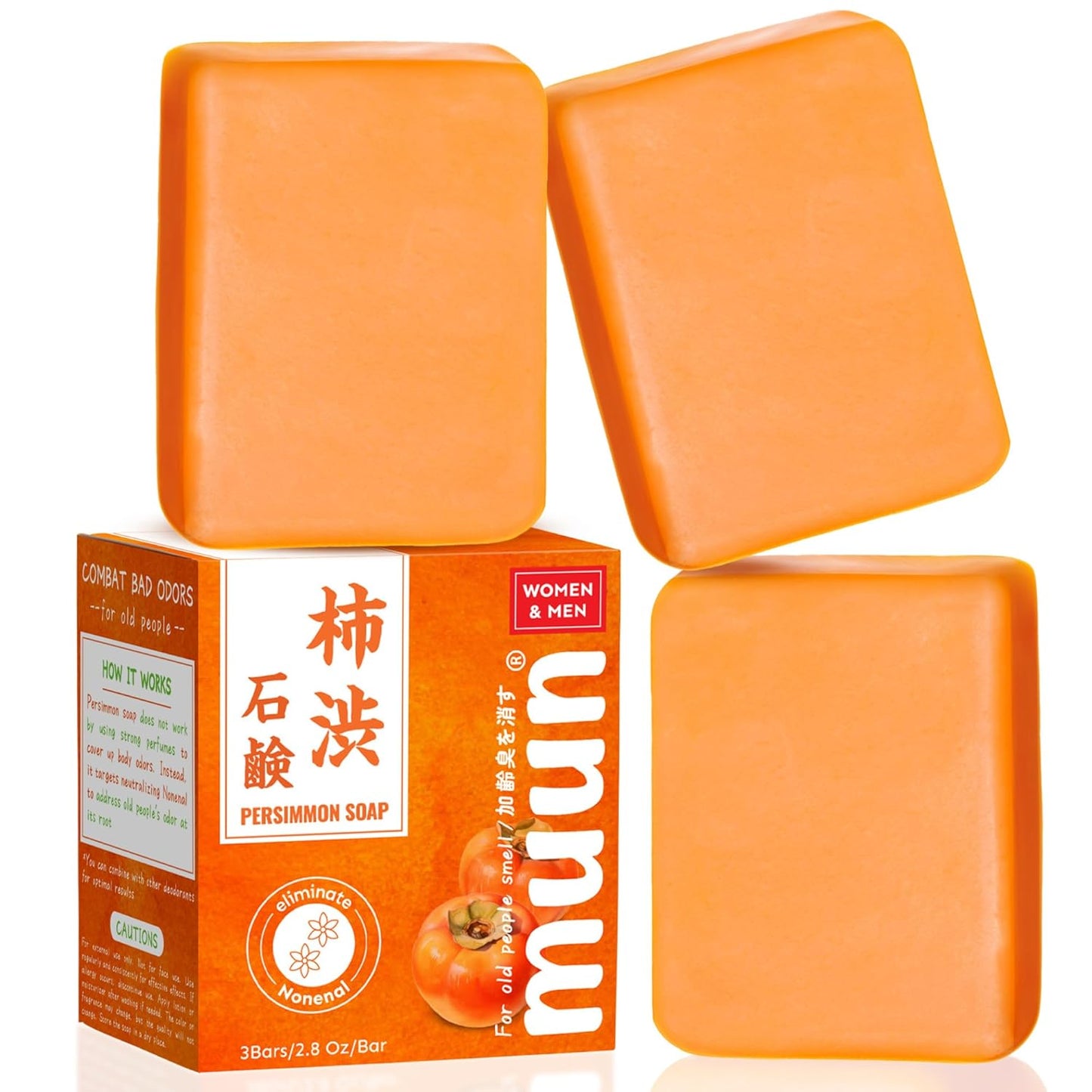
In short: Muun Persimmon Tannin Soap is a daily body bar made for the change in body odor that many of us notice from our 40s onward. Its key ingredient is persimmon tannin, a plant polyphenol long used in Japan to absorb and neutralize odor, in a base of coconut, grape seed, olive and camellia oils with green tea, licorice and oat extracts. It cleans without heavy perfume, so it works on odor instead of covering it. Three 2.8 oz (80 g) bars per pack. Use it daily on underarms, neck, behind the ears, inner thighs, feet and the outer bikini area, and give it a couple of weeks of consistent use. For external use only; not for the face. Everything below explains why.
A product page tells you what a soap is. It doesn't have room to explain the thing most people actually want to understand: why a change in body odor shows up in midlife even when you shower every day, and why your usual soap doesn't seem to touch it. This guide covers that, plus what's in the bar, how to use it so it lasts, and what to expect in your first month.
"Old people smell" isn't about hygiene. It's chemistry.
Let's start with the awkward part, kindly. Many people notice a new kind of body odor somewhere in their 40s or 50s. It isn't the sharp smell of sweat after a workout. It's quieter, often described as greasy, grassy or "stale," and it tends to linger on pillowcases, collars and the inside of hats. People call it "old people smell," which makes it sound like a personal failing. It isn't.
In 2001, researchers in Japan studying body odor across age groups found an odor compound that showed up mainly in people over 40 and increased with age. It forms when certain fatty acids in the skin's natural oils (sebum) oxidize. As we get older, the mix of fatty acids in our sebum changes and our skin's own antioxidant defenses slow down, so more of these oils oxidize, and more of that compound forms. In Japan this kind of odor even has its own name, kareishū (加齢臭), roughly "aging odor," and an entire category of personal care grew up around it.
For women, the timing often lines up with perimenopause and menopause, when hormonal shifts, hot flashes and night sweats change what's happening on the skin. If you've noticed your body smells different than it did at 30, that is common, normal, and nothing to be embarrassed about.
Why your regular soap doesn't quite get it
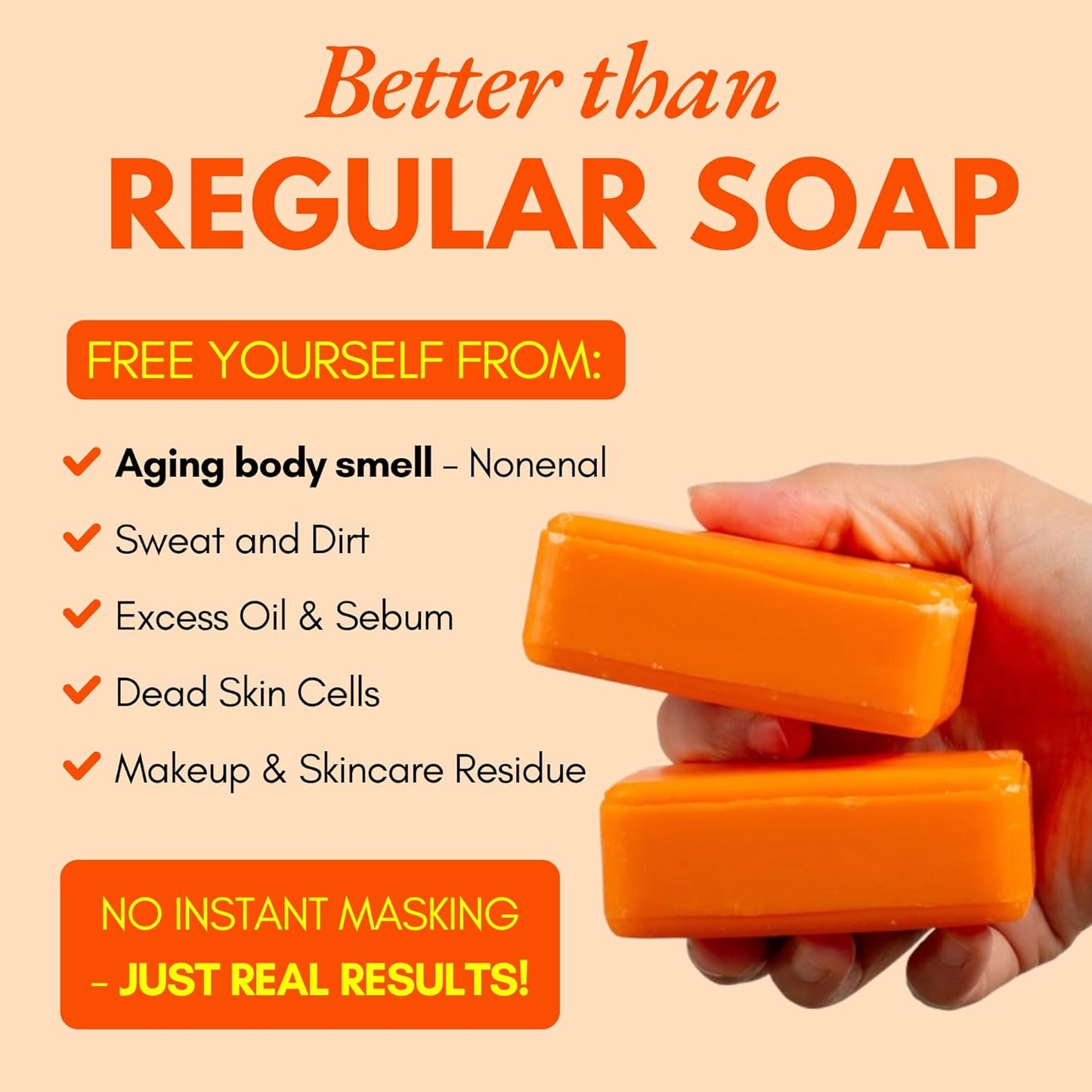
Sweat-related odor is mostly water-soluble and rinses away easily. Aging body odor is different: it comes from an oily compound that clings to skin and fabric, so a quick shower with an ordinary bar doesn't always remove it. A lot of products respond by adding more fragrance on top. That works for an hour, then the perfume fades and the original odor is still there, now with company.
We wanted the opposite approach: clean the skin thoroughly, use an ingredient that targets odor molecules directly, and keep the scent light enough that nothing is being hidden.
What persimmon tannin is, and why it's the hero here
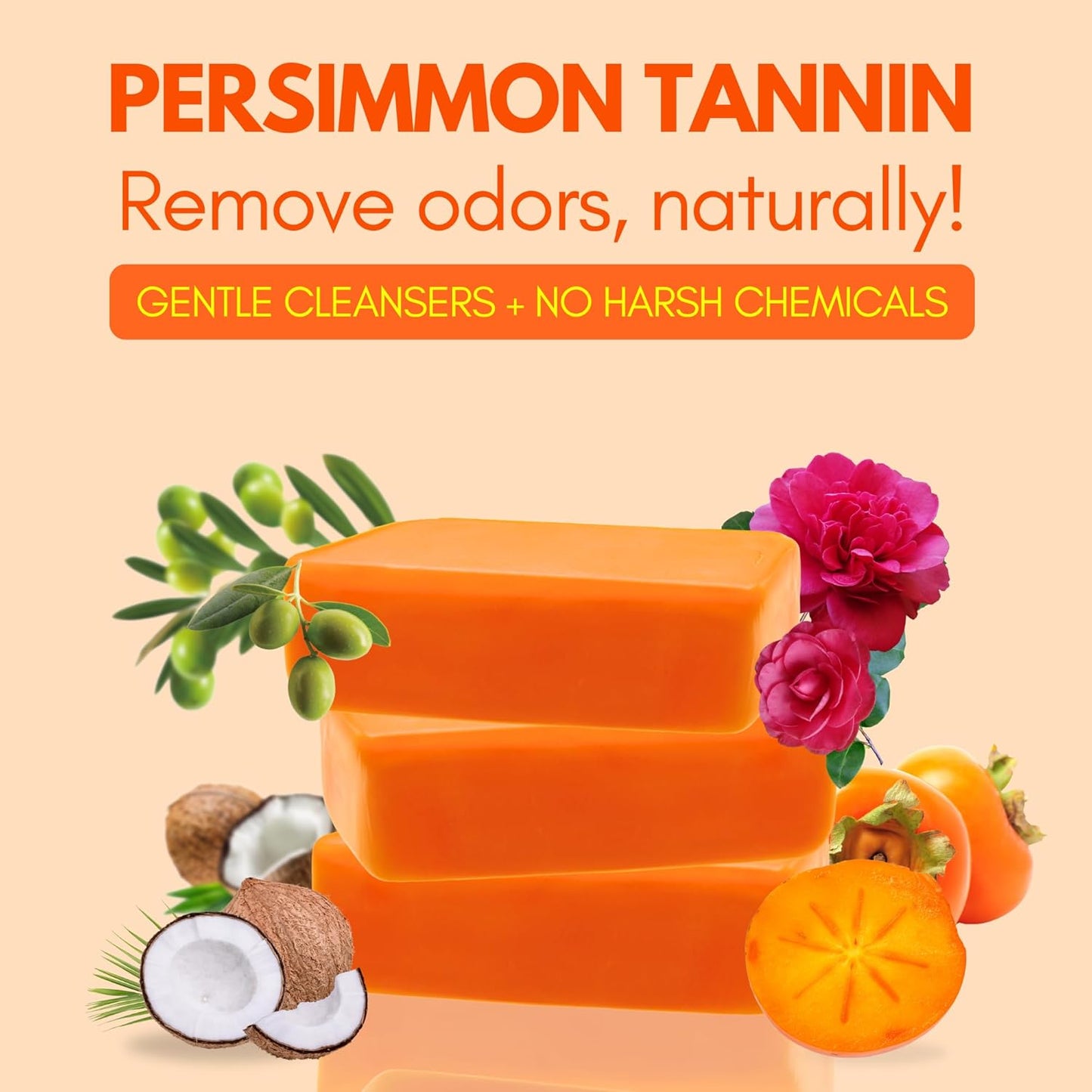
Persimmon tannin (in Japan, kakishibu) comes from unripe persimmons. It's rich in condensed tannins, a type of plant polyphenol, and for centuries it was used in Japan to treat fabric and wood because it protects and preserves. Those same tannins are known for binding to odor-causing molecules, which is why persimmon extract became a standard ingredient in Japanese deodorizing soaps and body washes.
The idea is simple: rather than masking odor with perfume, persimmon tannin helps neutralize and wash away the molecules that cause it, while the rest of the formula cleans and cares for the skin. Tannins are also natural antioxidants, which matters when the odor you're dealing with comes from oxidation in the first place.
Two honest notes.
It works with consistency, not on the first wash. Our box says it plainly, and customers who stick with it say the same: the difference shows after several days of daily use, not after one shower. Think of it as a routine, not a rescue.
It's a cleanser, not a medical product. If you notice a sudden, strong change in body odor along with other symptoms, it's worth checking in with your doctor, because odor can occasionally be a sign of something else going on.
What's in the bar (and why each ingredient is there)
Full ingredient list: Cocos Nucifera (Coconut) Oil, Vitis Vinifera (Grape) Seed Oil, Persimmon Tannin, Olea Europaea (Olive) Fruit Oil, Sorbitol, Camellia Japonica Seed Oil, Green Tea Extract, Glycyrrhiza Uralensis (Licorice) Extract, Avena Sativa (Oat) Extract, Hydrolyzed Collagen, Sodium Hyaluronate, Anthemis Nobilis Flower Oil, Propylene Glycol, Glycerin, Stearic Acid, Sodium Hydroxide.
Here's what that means in plain language:
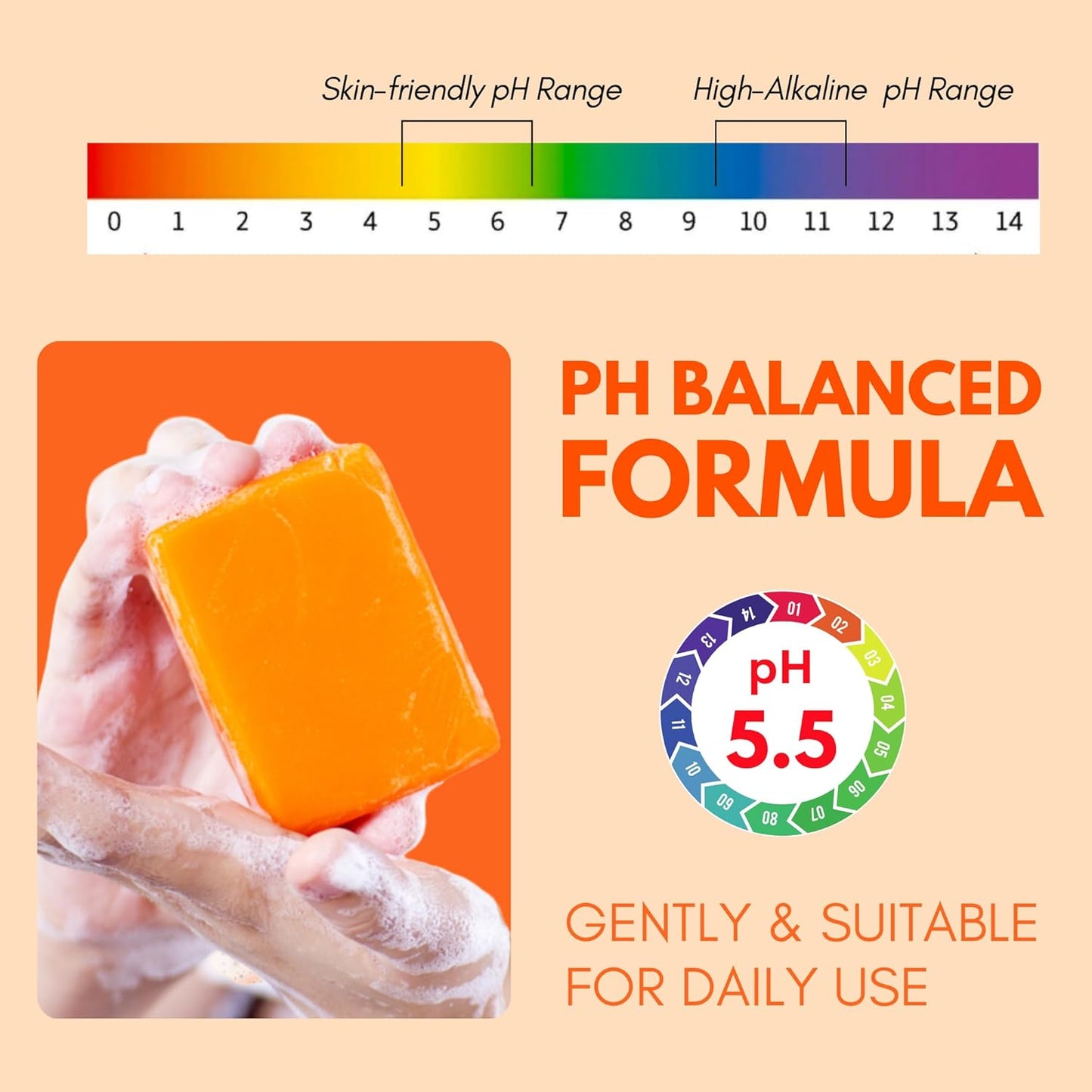
The cleansing base: coconut, grape seed and olive oils. Coconut oil gives a rich, creamy lather that lifts away oil, sweat and dead skin. Grape seed and olive oils keep the clean from feeling stripping. (Sodium hydroxide is what turns oils into soap during saponification; no free lye remains in the finished bar.)
The odor-fighter: persimmon tannin. Third on the list, which tells you it's a core ingredient, not a sprinkle for the label.
The Japanese skincare touch: camellia seed oil and green tea extract. Camellia (tsubaki) oil is a classic in Japanese beauty for softness. Green tea extract brings catechins, another family of antioxidant polyphenols that pair naturally with persimmon tannin.
The calm-down crew: licorice, oat and Roman chamomile. Licorice root and oat extracts are traditional soothing ingredients for sensitive skin. Roman chamomile flower oil adds a soft, natural note to the scent.
The moisture keepers: glycerin, sorbitol, sodium hyaluronate and hydrolyzed collagen. These hold water in the skin, which is why many customers tell us the bar doesn't leave them tight or dry, even as skin gets drier with age.
What's not in it: no sulfates, no parabens, no heavy synthetic perfume. Cruelty-free.
Why it's orange: the color comes from the persimmon. The scent is light and clean rather than fruity or floral. Because it's made with natural ingredients, color and scent can vary slightly from batch to batch; the quality doesn't.
How to use it for the best results
Daily, in the shower. Wet the bar, work up a lather in your hands or on a washcloth, and focus on the areas where odor tends to collect:
- Underarms
- Back and sides of the neck
- Behind the ears
- Chest and upper back
- Inner thighs and the outer bikini area
- Feet
Let it sit for a moment. Leave the lather on these areas for 30 to 60 seconds before rinsing, so the tannin has time to work, then rinse thoroughly.
Stay with it. Use it every day for at least two weeks before you judge it. That's when many people notice a difference in how their skin, and their sheets, smell.
Pair it with your deodorant. Persimmon soap cleans the slate; your deodorant handles the day. Together they work better than either alone.
Moisturize if you need to. If your skin runs dry, follow with a light, unscented lotion.
Keep it dry between showers. This is a softer, more translucent bar than a hard drugstore soap, which is part of what makes it gentle. It also means it melts if it sits in water. Use a draining soap dish or a mesh soap bag hung away from the spray, and your bar will last noticeably longer. For one person using it daily, a bar lasts roughly one to two weeks.
A note on the intimate area
Muun started in feminine care, so we'll be precise here. Use the soap only on the external skin of the bikini line and groin, never inside the vagina, and rinse well. Intimate skin is more delicate than the rest of the body; if you're prone to irritation there, use a dedicated gentle intimate wash for that area and keep the persimmon bar for everywhere else.
Who it's for
Women in their 40s, 50s and beyond, especially in perimenopause and menopause, who've noticed their body odor has changed and want a gentle daily fix instead of more perfume.
The people you share a bathroom with. Persimmon soap is unisex. Many of our customers buy it for a partner, and many of them end up using it too.
Aging parents. A lot of our customers buy this for a mom or dad. It's an easy, dignified way to help without having an awkward conversation. Just put it in the shower.
Anyone with stubborn odor in "hard to rinse" places: behind the ears, the back of the neck, feet, or after a long day in workout gear.
Who should be careful: if you have very sensitive skin or a known allergy to any ingredient, do a patch test on your inner arm first. Stop using it if irritation occurs.
Cautions
For external use only. Not for use on the face. Avoid contact with eyes; if it happens, rinse with plenty of water. If irritation or an allergic reaction occurs, discontinue use. Keep out of reach of children. Store in a cool, dry place.
What to expect in your first month
Week 1: A creamy lather, a light clean scent, skin that feels soft rather than tight. You may not notice much change in odor yet, and that's normal.
Week 2: This is when many people start to notice it: fresher pillowcases, collars and t-shirts at the end of the day, and less of that lingering "stale" note.
Weeks 3 and 4: It becomes part of your routine. Your perfume or deodorant may even smell better, because it isn't competing with anything underneath.
If anything surprises you, good or bad, email us. We read every message.
About Muun
Muun is a wellness brand built around women's daily routines: made with natural ingredients and kept deliberately simple. Persimmon Tannin Soap is part of our persimmon body care line, alongside Persimmon Body Wash for those who prefer a liquid cleanser and Persimmon Shampoo for the scalp and hair, where the same odor can hide.
Our brand line is less is more: one good bar, used every day, instead of layers of fragrance.
Contact: hello@muuncare.com · @muuncare on Facebook and Instagram
Frequently asked questions
Is "old people smell" real? Yes. Researchers have found an odor compound that increases from around age 40, formed when the skin's natural oils oxidize. It's a normal part of aging, not a sign of poor hygiene.
How is persimmon soap different from regular soap? Regular soap removes sweat and dirt well but isn't designed for oily, clingy odor compounds, and many deodorant soaps rely on strong perfume. Persimmon soap contains persimmon tannin, a plant polyphenol that binds to odor molecules so they can be washed away, with only a light natural scent.
How long until I notice a difference? Many people notice it after one to two weeks of daily use. It isn't designed to work in a single shower.
Can I use it on my intimate area? On the external skin of the bikini line and groin only, never internally. Rinse thoroughly. If your intimate skin is sensitive, use a dedicated intimate wash there instead.
Can I use it on my face? No. It's formulated for the body. Use a facial cleanser on your face.
Does it have a strong scent? No. The scent is light and clean, from the persimmon and a touch of Roman chamomile. It's meant to neutralize odor, not cover it.
Is it good for sensitive or dry skin? The formula includes glycerin, sodium hyaluronate, oat, licorice and camellia oil to keep skin comfortable, and many customers with sensitive, mature skin use it daily. If you're unsure, patch test first.
Can men use it? Yes, it's unisex. Many customers share it with their partner.
Should I stop using deodorant? No. Use both. The soap cleans away odor at the source; deodorant handles the hours after your shower.
How long does one bar last? Roughly one to two weeks for one person using it daily. Keep it dry between showers in a draining dish or mesh bag; it melts faster if it sits in water.
Why are the bars smaller and softer than regular soap? Each bar is 2.8 oz (80 g) and made with a high share of oils and moisturizers, which gives a gentler, more translucent bar than a hard drugstore soap. Three bars come in each pack.
Is it sulfate-free and paraben-free? Yes. No sulfates, no parabens, and it's cruelty-free.
Can I use it on my hair? It's made for the body. For the scalp, where aging odor also collects, Muun Persimmon Shampoo is the better fit.
This product is a cosmetic cleanser. It is not intended to diagnose, treat, cure, or prevent any disease. For external use only. Individual results may vary.